
Best Ayurvedic Cream for Psoriasis: What to Look For
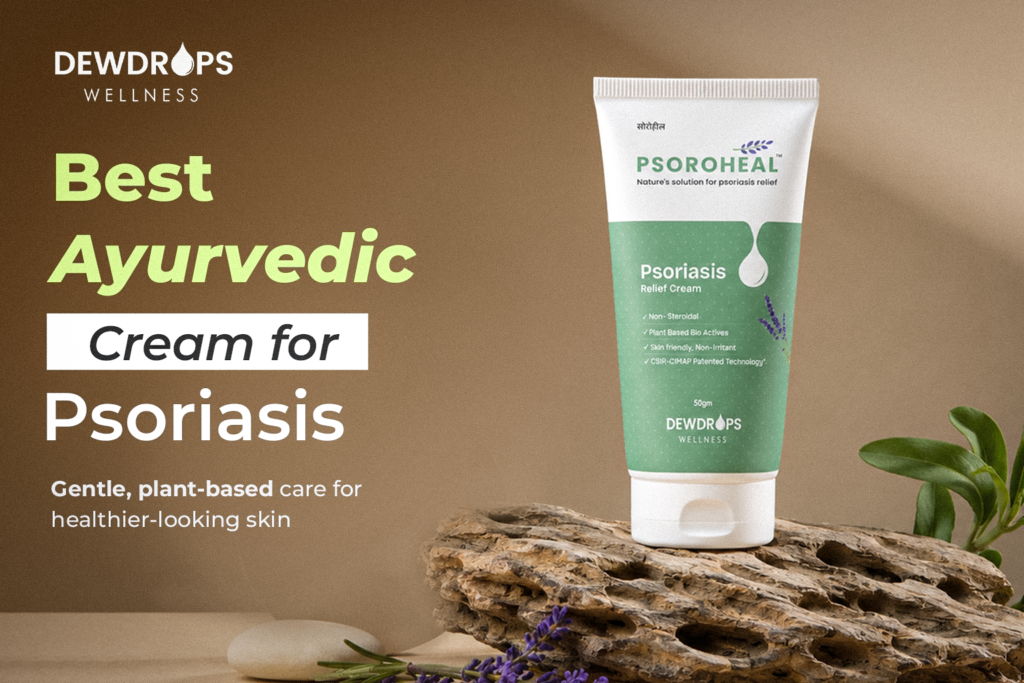
Best Ayurvedic Cream for Psoriasis: What to Look For
Most people with psoriasis try a long list of things to get relief. Some worked for a month. Some stung so badly you gave up on day two. Somewhere in this process, the search shifts, you start hunting for something mild enough to use every single day without thinking twice about it. This is why the best Ayurvedic cream for psoriasis has become a growing search in India.
This guide explains what psoriasis is, how Ayurveda looks at the condition, what to look for on a product label, and when using a cream alone isn’t enough.
What Is Psoriasis?
Your skin normally replaces itself every few weeks. With psoriasis, new skin cells grow much faster than usual. The old cells don’t have time to shed, so they pile up on the surface. That build-up is what you see: red, irritated skin covered by a dry, flaky, silvery layer that can itch or crack.
Scalp, elbows, knees, lower back are the usual addresses. Flares arrive and fade on no fixed schedule. Behind all of it sits the immune system, pushing skin growth too hard. Psoriasis is long-term but not contagious.
The Ayurvedic Approach to Psoriasis
Ayurveda looks at the whole body, not just the skin. Trouble on the surface means something inside has drifted out of balance. The work is to settle that first, and soothe the skin.
Ayurveda’s approach to skin relies largely on plants. Neem, Turmeric, Aloe-vera, Manjistha. The same handful of names has been turning up in Ayurvedic writing on skin for centuries.
Ayurvedic treatment for psoriasis is rarely just a cream. It pairs what goes on your skin with your eating habits and sleeping habits. Oil massage often features. Simple food too.
Herbal care can ease dryness, itching, and flaking but cannot switch the condition off. Most dermatologists have no problem with a gentle herbal cream running alongside prescribed treatment. Just tell yours what you are using.
What to Look For in the Best Ayurvedic Cream for Psoriasis
The front of the pack is marketing. The back of the pack is information. Read the back.
- Plants on the top. Ingredient lists run in order of quantity. An Ayurvedic psoriasis cream opens with neem, turmeric, aloe-vera, or a base oil like sesame or coconut, not with water and thickeners.
- Nothing harsh. Parabens, heavy alcohol, strong fragrance. That last one is behind a lot of the stinging people who end up blaming the herbs.
- A texture you will tolerate. This matters more than it sounds. A cream that drags or leaves you sticky gets abandoned by week two, and an abandoned cream helps nobody.
- Built for daily use on sensitive skin. Read the label for that phrasing. Psoriasis skin is already irritated, and a formula designed for normal skin can be too much on an irritated skin.
- Dermatologically tested. Look for it on the pack. It means the product passed a skin safety check.
- Reviews from skin like yours. Skim past the five-star one-liners. Look for someone describing your kind of patch.
- A sensible promise. Natural psoriasis relief is slow work. Softer patches, less itch, a few weeks in.
How to Use It in a Daily Routine
Patch test before your first full use. Put a little on your inner arm and wait a day for burning or a rash. After that, the routine is simple.
- Clean. Lukewarm water, mild cleanser. Hot water strips oil and leaves you flakier than before.
- Dry, but not bone dry. Pat with a soft towel and stop while the skin is still a little damp. Cream holds better that way.
- Apply thin. A thin layer of cream rubbed in gently beats a thick one sitting on top.
- Hands off the scales. No scrubbing, no picking. Damaged skin can trigger fresh patches.
- Scalp. Part the hair in sections and work a scalp psoriasis cream into the skin itself. Your hair strands do not need it.
- Body. Morning and night. A skin psoriasis cream does its best work on a fixed rhythm.
Skipping days for a week at a time is the most common reason people say a cream did nothing. Pair it with steady sleep, less stress, and simple food. Skin responds to all of it.
When to See a Doctor
Some situations need a doctor, not a cream. Book an appointment if the patches cover a large part of your body. Do the same if they spread fast, crack, bleed, or look infected. Painful or swollen joints are another reason to get checked, because psoriasis can affect the joints in some people.
See a dermatologist if six to eight weeks of steady use bring no change at all. Prescription options exist for exactly this situation and they work well for many people.
One honest note. Psoriasis has no permanent cure. A good cream can soothe, soften, and calm a flare. It cannot end the condition.
Closing Thoughts
Psoriasis flares and settles on its own. The useful response is steady gentle care rather than a rescue mission every few months. That is the space a good cream lives in. Pick the best Ayurvedic cream for psoriasis based on its ingredient list and how it feels. Avoid the promise printed across the packaging. Use it, tell your doctor about it, and give it a few consistent weeks. The goal is a skin that bothers you less, and finding the Best Ayurvedic Cream for Psoriasis that helps you with it.
Frequently Asked Questions
What is the best Ayurvedic cream for psoriasis?
The best Ayurvedic cream for psoriasis should contain gentle herbal ingredients, be suitable for sensitive skin, and be designed for regular use. Look for a clear ingredient list and avoid products that make unrealistic claims about permanently curing psoriasis.
Can Ayurvedic cream help with psoriasis?
An Ayurvedic cream may help soothe dryness, itching, flaking, and irritated skin. However, psoriasis is a chronic condition, so a cream should be considered part of an overall skin-care and treatment routine rather than a permanent cure.
Which Ayurvedic ingredients are commonly used for psoriasis-prone skin?
Ingredients such as Aloe Vera, Neem, Turmeric, Manjistha, and certain plant-based oils are commonly used in Ayurvedic skin care. Their suitability can vary from person to person, especially when the skin is sensitive or inflamed.
Can I use an Ayurvedic psoriasis cream every day?
Some Ayurvedic creams are formulated for daily use, but always check the product label first. If your skin is very sensitive, patch-test the cream before applying it to larger areas.

