
Psoriasis vs Eczema: How to Tell the Difference and Treat Each One
Psoriasis vs Eczema: How to Tell the Difference and Treat Each One
Your skin is red, itchy, won’t calm down, and you do not understand. Psoriasis and eczema get mixed up a lot. Both cause red, uncomfortable patches that look almost identical.The two look so similar that even the internet can leave you more confused than before. But once you take a closer look, the Psoriasis Vs Eczema Difference becomes easy to spot, after the right guidance, so does the right way to treat each one.
Getting confused between the two means reaching out for the wrong cream, which can slow things down instead of helping in the healing process. Getting the diagnosis right from the start really matters. This blog breaks down how to tell them apart and what actually helps. .
What Is Psoriasis?
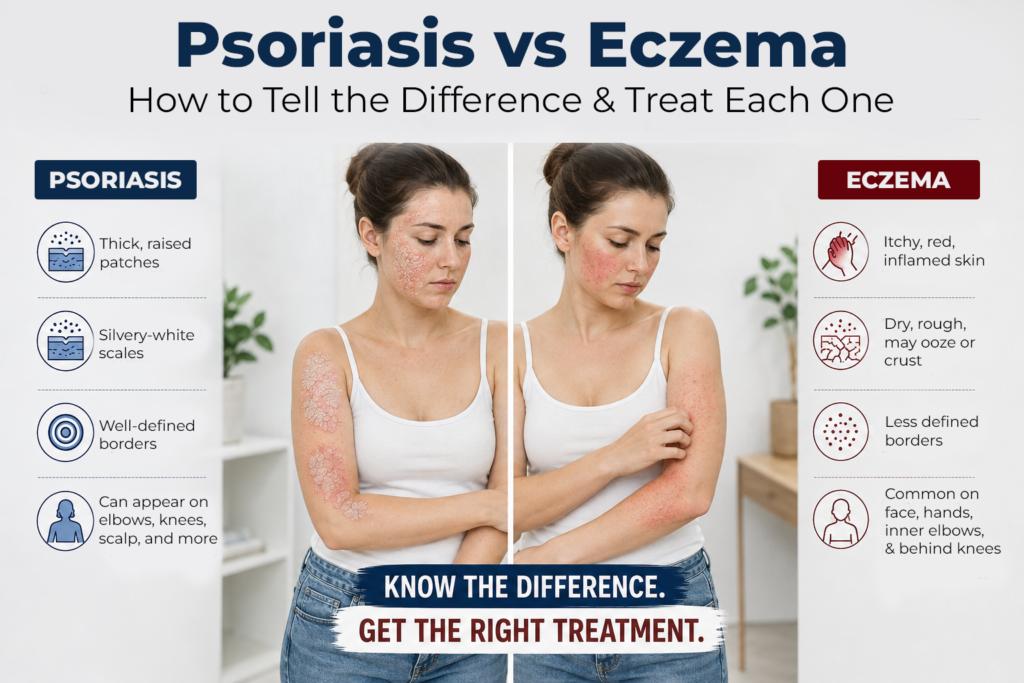
Psoriasis starts inside the body. It is fundamentally an autoimmune condition, where the immune system malfunctions, and tells the skin cells to multiply faster than they actually should. These cells pile up on the surface because they cannot shed fast enough. As a result, they form thick, raised patches.These patches look different from regular, dry skin.
A few things you’ll notice:
- Silvery-white scales sitting on top of red areas
- Thick, raised patches on the skin
- Dryness skin that cracks or bleeds
- Patches showing up on elbows, knees or scalp
It tends to show up in adulthood, though there are exceptions.
What Is Eczema?
Atopic Dermatitis, known as Eczema, develops when the skin barrier does not work properly. The outer layer of skin stops retaining moisture the way it should. This makes it sensitive to environmental triggers. In response, the immune system overreacts and causes inflammation.
The symptoms can feel unbearable at times, making the skin intensely dry, itchy, and inflamed. During flare-ups, affected areas may become red and swollen. In some cases they may also release clear fluid before forming a crust.
Eczema tends to show up in different spots than you might expect – hands, face, neck, and especially those soft, bendy areas like the inside of your elbows and behind your knees. One thing that sets it apart from psoriasis is that it usually doesn’t leave thick, raised patches psoriasis is known for. Eczema is also linked with allergies – a lot of people who have Eczema also deal with asthma or hay fever, almost like the conditions travel together.
Psoriasis vs Eczema: Key Differences
Here’s a quick comparison to help understand the distinction better:
Factor | Psoriasis | Eczema |
Cause | Autoimmune (rapid skin cell production) | Weakened skin barrier, allergic or environmental triggers |
Appearance | Thick, raised patches with silvery scales | Dry, red, sometimes moist or crusted patches |
Common Areas | Elbows, knees, scalp, lower back | Hands, face, inner elbows, inner knees |
Itch Level | Moderate to intense | Usually very intense, often worse at night |
Age of Onset | Any age; peaks in teens and adults over 50 | Typically begins in infancy or early childhood |
For a detailed clinical breakdown, the NHS guidance on psoriasis and eczema is a reliable starting point.
How to Treat Psoriasis
There’s no permanent cure for psoriasis. But that does not mean you’re stuck living it. Since it’s usually a long-term thing, a lot of people stay away from strong steroid creams.This is why they lean toward gentler options for this purpose. Repeated steroid use over a long period of time can thin the skin, so it’s worth thinking long-term here.
A good routine can make a major difference. Some steps that may help:
- Watching out for personal triggers
- Preventing the skin from cracking by keeping it well moisturized
- Applying a gentle, non-steroidal cream to help the redness and itching
When people search for the best cream to treat psoriasis, they look for something that calms the skin, without loading it up with harsh chemicals and steroids. Psoroheal is one option some people find useful, as part of a regular psoriasis care routine.It uses herbal ingredients and avoids steroids altogether.
How to Treat Eczema
With eczema, the most important thing to focus on is protecting the skin barrier. The goal is to stay ahead of flare-ups rather than reacting to them. Some habits that genuinely help:
- Hydrating the skin right after taking a shower, while skin is still a bit damp
- Staying away from harsh soaps, wool or any known triggers
- Sticking to lukewarm water instead of hot showers
- Talking to a dermatologist about a plan that fits your specific triggers
Eczema varies from person to person. There’s no single product that works for everyone here. It really depends on what’s triggering your flare-ups.
When to See a Doctor
Some flare-ups settle with basic care. Others might need professional attention. It’s worth seeing a dermatologist if:
- Symptoms last more than two weeks without improvement
- The affected area spreads quickly/new patches appear
- Skin cracks, bleeds, becomes severely irritated
- Itching becomes intense enough to disrupt your sleep
A confirmed diagnosis matters here. Since psoriasis and eczema need different strategies, using the wrong product for the wrong condition can delay relief instead of aiding it. A doctor can help you figure out what is actually going on with your skin.
Conclusion
Even though Psoriasis and Eczema may look similar, they are completely different types of skin conditions which need to be treated in different ways. Treatment only works if you have the correct diagnosis of your skin condition. It is worth finding out what you actually have before reaching for a product to treat it.
If you’re dealing with psoriasis symptoms, Psoroheal is one option worth knowing about – it’s a herbal cream that doesn’t rely on steroids.
Frequently Asked Questions
What is the main difference between psoriasis and eczema?
Psoriasis is an autoimmune condition that causes thick, raised patches with silvery-white scales, while eczema is linked to a weakened skin barrier and often causes intensely itchy, dry, red, or inflamed skin.
How can I tell if I have psoriasis or eczema?
Psoriasis often appears as well-defined, thick patches with silvery scales on areas such as the elbows, knees, scalp, and lower back. Eczema commonly affects the hands, face, neck, inner elbows, and behind the knees and tends to be very itchy.
Is psoriasis more itchy than eczema?
Both conditions can cause itching, but eczema is often associated with more intense itching. Psoriasis can also cause moderate to severe itching, particularly during flare-ups.
Can psoriasis and eczema look the same?
Yes. Both can cause red, dry, irritated patches, making them difficult to distinguish. The appearance, location, scaling, and symptoms can provide clues, but a dermatologist can provide the most reliable diagnosis.

