
Psoriasis Steroid Cream: Risks You Should Know & Safer Alternatives
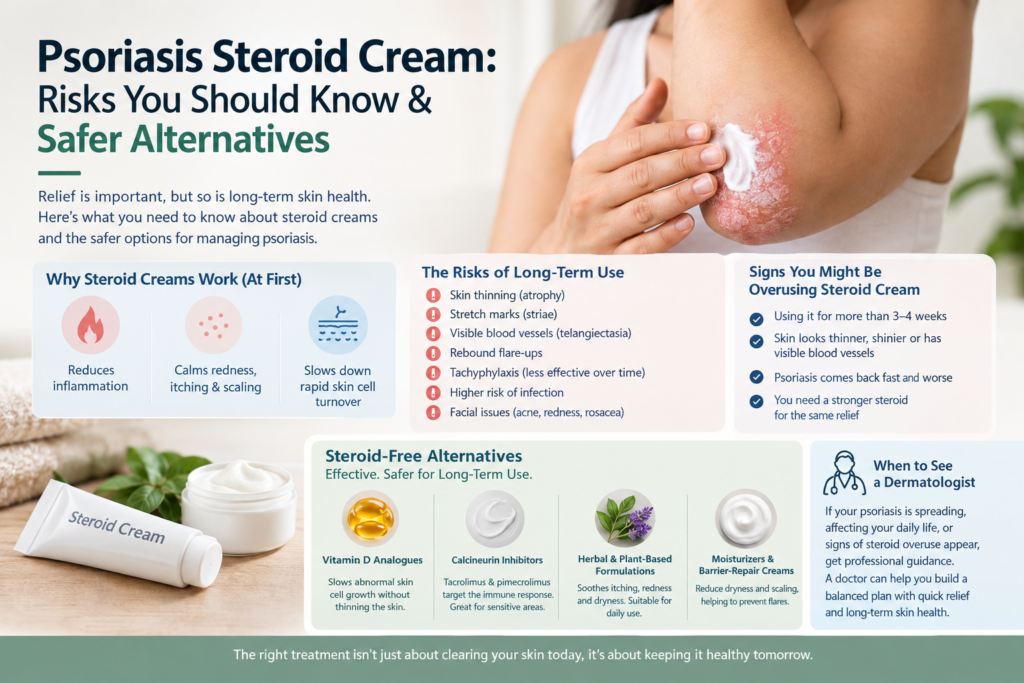
Psoriasis Steroid Cream: Risks You Should Know & Safer Alternatives
Steroid creams are usually the first thing a dermatologist prescribes for a psoriasis flare-up, and for good reason. They calm redness, itching, and inflammation fast. But psoriasis is a chronic condition, not a one-time infection, so it needs long-term management, not just a quick fix. If you’ve been relying on a Psoriasis Treatment Cream that contains steroids for weeks or even months now, and you’re wondering whether that’s still the right call, here’s what’s worth knowing.
Why Steroid Creams Work So Well, At Least At First
Corticosteroid creams such as mometasone, betamethasone, and clobetasol reduce inflammation and slow down the rapid skin cell turnover behind psoriasis plaques. In a matter of days, redness fades, scaling goes down, and itching becomes far more manageable. That’s exactly why steroids are usually the go-to first option.
The problem is that psoriasis doesn’t actually go away. It’s a chronic, relapsing condition, and steroid creams simply weren’t designed for indefinite everyday use.
What Happens When You Use Steroid Creams for Too Long
Most dermatologists recommend keeping continuous steroid use to a 2 to 3 week window. Go beyond that, and a number of side effects can start showing up:
- Skin thinning (atrophy): Steroids slow down collagen production over time, which leaves skin fragile, delicate, and more prone to tearing.
- Stretch marks (striae): These show up most often in thinner-skinned areas like the inner arms, groin, or underarms, and once they appear, they tend to be permanent.
- Visible blood vessels (telangiectasia): As the skin thins, small surface blood vessels become more noticeable.
- Rebound flare-ups: Stopping a steroid cream suddenly after long-term use can cause psoriasis to come back, sometimes worse than it was to begin with. This is often called “steroid rebound” or topical steroid withdrawal.
- Tachyphylaxis: Skin can stop responding as well to the same steroid over time, which pushes people toward stronger formulations just to get the same result.
- Increased risk of infection: Thinner, compromised skin is more vulnerable to both bacterial and fungal infections.
- Facial issues: Used on the face for too long, steroids can trigger acne, redness, or a rosacea-like reaction.
None of this makes steroid creams a bad option. Used at the right strength, for the right duration, and under a doctor’s supervision, they’re still an effective and safe part of managing a flare. The real issue is unsupervised, continuous, long-term self-use, which happens more often than you’d think, mainly because the relief feels so good that people keep reaching for the tube long after they should have stopped.
Signs You Might Be Overusing Steroid Cream
- You’ve been using the same cream continuously for more than 3 to 4 weeks
- Your skin has started looking thinner, shinier, or you can see tiny blood vessels
- Your psoriasis comes back fast, and worse, whenever you stop applying it
- You now need a stronger steroid than before just to get the same relief
If any of that sounds familiar, it’s worth talking to a dermatologist about slowly tapering off and working a steroid-free option into your routine instead.
Steroid-Free Alternatives Worth Knowing About
Steroids aren’t the only route to managing psoriasis. Depending on how severe your symptoms are, here are the options most commonly used instead:
1. Vitamin D Analogues
Calcipotriol-based creams slow abnormal skin cell growth without the skin-thinning risk that comes with steroids, which makes them a better fit for long-term use.
2. Calcineurin Inhibitors
Tacrolimus and pimecrolimus creams target the local immune response driving psoriasis. They’re often prescribed for sensitive spots like the face and skin folds, where long-term steroid use carries more risk.
3. Herbal and Plant-Based Formulations
If you’re dealing with chronic, relapsing psoriasis, chances are you’ve searched for the best psoriasis cream in India that you can actually use every day without worrying about long-term side effects. This is where herbal formulations come in. Built around ingredients like aloe vera, lavender oil, and other botanical actives, they’re made to soothe itching, redness, and dryness gently enough for daily use over the long haul. Psoroheal is one such option, a non-steroidal herbal cream made with aloe vera and lavender oil, meant for people who want to support skin comfort as part of their daily psoriasis-prone skincare routine. Like any steroid-free product, it’s best used to manage everyday symptoms and support comfort between flares, rather than as a stand-in for prescribed treatment during a severe flare.
4. Moisturizers and Barrier-Repair Creams
These won’t treat the underlying inflammation, but thick, fragrance-free emollients do cut down on dryness and scaling, which in turn eases itching and the constant urge to scratch. That alone can help stop a flare from getting worse.
Putting Together a Routine You Can Actually Stick With
Since psoriasis is something you’ll likely manage for life, the most realistic approach for most people ends up being a mix of both worlds:
- Use steroid creams for short, supervised bursts when a flare is active
- Bring in a steroid-free option, whether that’s a vitamin D analogue, a calcineurin inhibitor, or a gentle herbal cream, for everyday care
- Keep skin consistently moisturized so the skin barrier stays supported
- Learn to spot early signs of a flare so you can act before things get worse
When It’s Time to See a Dermatologist
If you’re noticing signs of steroid overuse, your psoriasis seems to be spreading, or it’s starting to affect your day-to-day life, it’s time to see a dermatologist rather than continuing to manage things on your own with over-the-counter products. A doctor can help you build a treatment plan that balances quick relief with long-term skin health, which might mean tapering off steroids while adding steroid-free products for everyday maintenance.
Frequently Asked Questions
Is it safe to use a steroid cream for psoriasis long-term?
Not really, at least not without medical supervision. Most dermatologists suggest limiting continuous steroid use to 2 to 3 weeks, since going longer raises the risk of skin thinning, stretch marks, and rebound flare-ups.
What happens if I stop using steroid cream suddenly?
Stopping cold turkey after prolonged use can trigger a rebound flare, where symptoms return and are sometimes worse than before. Tapering off gradually, ideally with a dermatologist’s guidance, tends to be safer.
Are steroid-free creams as effective as steroid creams for psoriasis?
It really depends on how severe things are. Steroid-free options like vitamin D analogues, calcineurin inhibitors, and herbal formulations tend to work better for daily, long-term maintenance and milder symptoms, while steroids are still commonly used for short bursts during active flares.

