
Early Signs of Psoriasis: What Your Skin Is Trying to Tell You
Early Signs of Psoriasis: What Your Skin Is Trying to Tell You
If you have ever looked down at a patch of dry, flaky skin and wondered whether it was just winter dryness or something more, you are not alone. Psoriasis often starts quietly. It shows up as a small patch that looks like ordinary dryness, gets brushed off with a bit of moisturizer, and then slowly grows into something you cannot ignore anymore. Catching it early makes a real difference, both for comfort and for how you manage it going forward, and it also shapes what you look for later in a psoriasis cream.
Skincare conversations online are more data driven than ever right now, with people tracking flare patterns, triggers, and product ingredients the way they once tracked calories. Psoriasis deserves the same attention, so let us walk through what early psoriasis symptoms actually look like, where they tend to show up first, and what you can do once you notice them, including what to look for if you start researching the best psoriasis cream in India.
What Early Psoriasis Looks Like
Psoriasis is a chronic skin condition where new skin cells form much faster than the body can shed old ones. That buildup is what creates the raised, scaly patches most people associate with the condition. But in its early stage, the signs are much subtler.
Here is what tends to appear first.
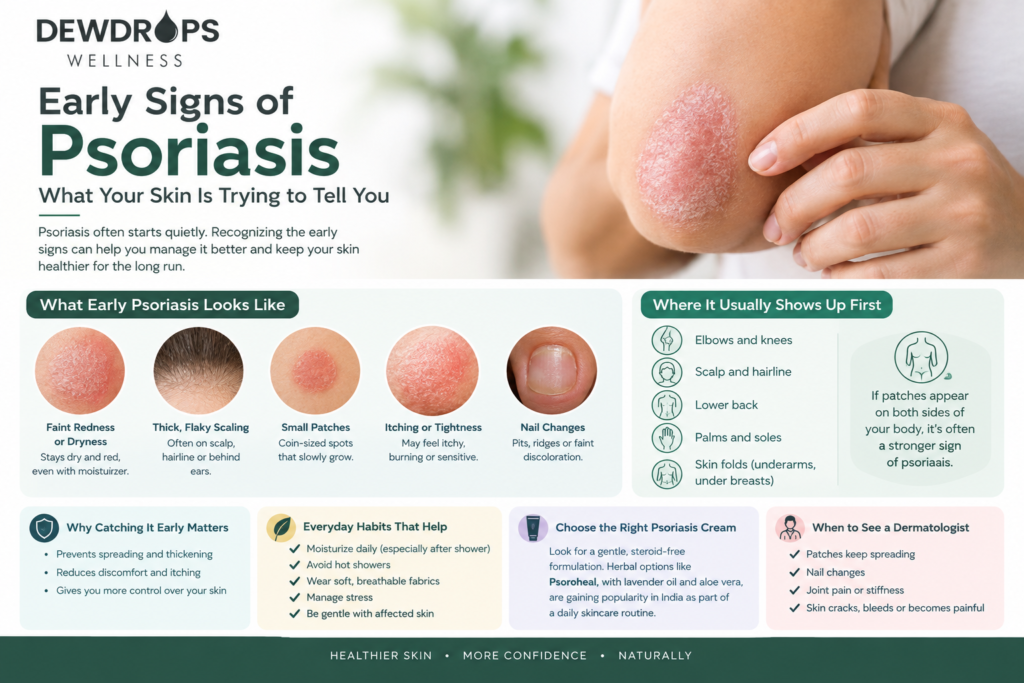
Faint redness or dryness that will not go away Regular moisturizer usually calms ordinary dry skin within a day or two. Early psoriasis patches tend to stay dry and slightly red no matter how much you hydrate them.
Fine, dandruff is like flaking on the scalp or hairline. Many people mistake this for regular dandruff. The difference is that psoriasis scaling tends to be thicker and more stubborn, and it often extends past the hairline onto the forehead or behind the ears.
Small, coin sized patches that slowly grow A tiny pink or reddish spot that seems to expand gradually over a few weeks is a classic early marker, especially if it starts showing up on both elbows or both knees around the same time.
Mild itching, burning, or tightness Before any visible plaque forms, skin can feel unusually tight or sensitive, and itching often gets worse in cold weather or during stressful periods.
Nail changes Tiny pits or ridges on one or two nails, or a faint yellowish discoloration under the nail, can appear even before skin symptoms become obvious.
Where It Usually Shows Up First
Psoriasis has a few favorite spots, mostly areas that see friction or pressure through the day.
- Elbows and knees
- Scalp and hairline
- Lower back
- Palms and soles
- Skin folds, such as underarms or under the breasts
If you notice similar patches appearing symmetrically, meaning on both sides of the body at once, that is one of the clearer signals that points toward psoriasis rather than a simple rash or allergic reaction.
Why Catching It Early Matters
Left unmanaged, small patches can thicken and spread, and the itching or discomfort can start interfering with sleep and daily routines. Early attention also means you get more say in how you manage your skin, whether that is through lifestyle changes, gentler skincare, or working with a dermatologist on a plan that fits your life.
Trigger tracking has become a genuinely useful habit here. Stress, weather changes, certain fabrics, alcohol, and even skipping moisturizer for a few days can all set off a flare. Keeping a simple note on your phone about when patches appear and what was different that week can help you spot your own personal triggers over time.
Everyday Habits That Help
While there is no single fix for psoriasis, a consistent routine goes a long way in keeping skin more comfortable.
- Moisturize daily, ideally right after a shower while skin is still slightly damp
- Avoid very hot showers, which tend to dry out and irritate skin further
- Choose soft, breathable fabrics like cotton over rough or synthetic materials
- Manage stress through simple routines like walking, stretching, or breathing exercises
- Be gentle with affected skin, since scratching or picking can make patches worse
Choosing the Best Psoriasis Cream for Early Patches
Once you notice early signs, many people start searching for the best psoriasis cream to keep patches calm before they spread. It helps to look for a psoriasis cream that skips harsh steroids, since long term steroid use on sensitive areas can bring its own concerns. This is where herbal, plant based formulations have been getting more attention lately among people searching for a psoriasis cream in India that fits a gentle, everyday routine.
Psoroheal, for instance, is a steroid free herbal cream made with ingredients like lavender oil and aloe vera, developed using CSIR-CIMAP technology and AYUSH certified. It is meant to be used as part of a gentle daily skincare routine to help soothe dry, uncomfortable skin, alongside the habits mentioned above rather than as a replacement for medical care.
When to See a Dermatologist
Home care and gentle skincare can help manage mild symptoms, but it is worth booking a dermatologist visit if you notice any of the following.
- Patches that keep spreading despite regular moisturizing
- Nail changes alongside skin symptoms
- Joint pain, stiffness, or swelling, which can sometimes point to psoriatic arthritis
- Skin that cracks, bleeds, or becomes painful
A dermatologist can confirm whether what you are seeing is actually psoriasis, rule out other conditions, and help you build a treatment plan suited to your skin type and lifestyle.
The Takeaway
Psoriasis rarely announces itself loudly at first. It usually starts as dryness that will not quit, a bit of scalp flaking that feels different from usual, or a small patch that slowly grows over a few weeks. Paying attention to these early signs of psoriasis, tracking your triggers, and building a gentle daily skincare routine can make a real difference in how your skin feels over time. And whenever you do start comparing the best psoriasis cream in India for your routine, a herbal formulation like Psoroheal is worth having a conversation about with your dermatologist as part of your overall care.
Frequently Asked Questions
What does psoriasis look like when it first starts?
It usually begins as faint red or pink patches with fine, dry scaling, often mistaken for regular dry skin or dandruff. The patches tend to stay dry no matter how much you moisturize, and they may slowly grow over a few weeks.
Can psoriasis start suddenly?
Yes, in some cases, especially guttate psoriasis, small drop shaped spots can appear quite quickly, sometimes within a few days, often after an infection or a period of high stress.
Is psoriasis itchy in the early stages?
Many people notice mild itching, burning, or a tight feeling in the skin even before a visible patch forms. Itching often gets worse in cold weather or during stressful periods.
How can I tell psoriasis apart from dry skin or eczema?
Dry skin usually improves within a day or two of regular moisturizing, while psoriasis patches tend to stay dry and well defined despite hydration. Psoriasis also often appears symmetrically, such as on both elbows or both knees, and can come with nail changes, which is less common with simple dry skin or eczema.

