
Your Guide to Psoriasis: Causes, Signs and Daily Relief
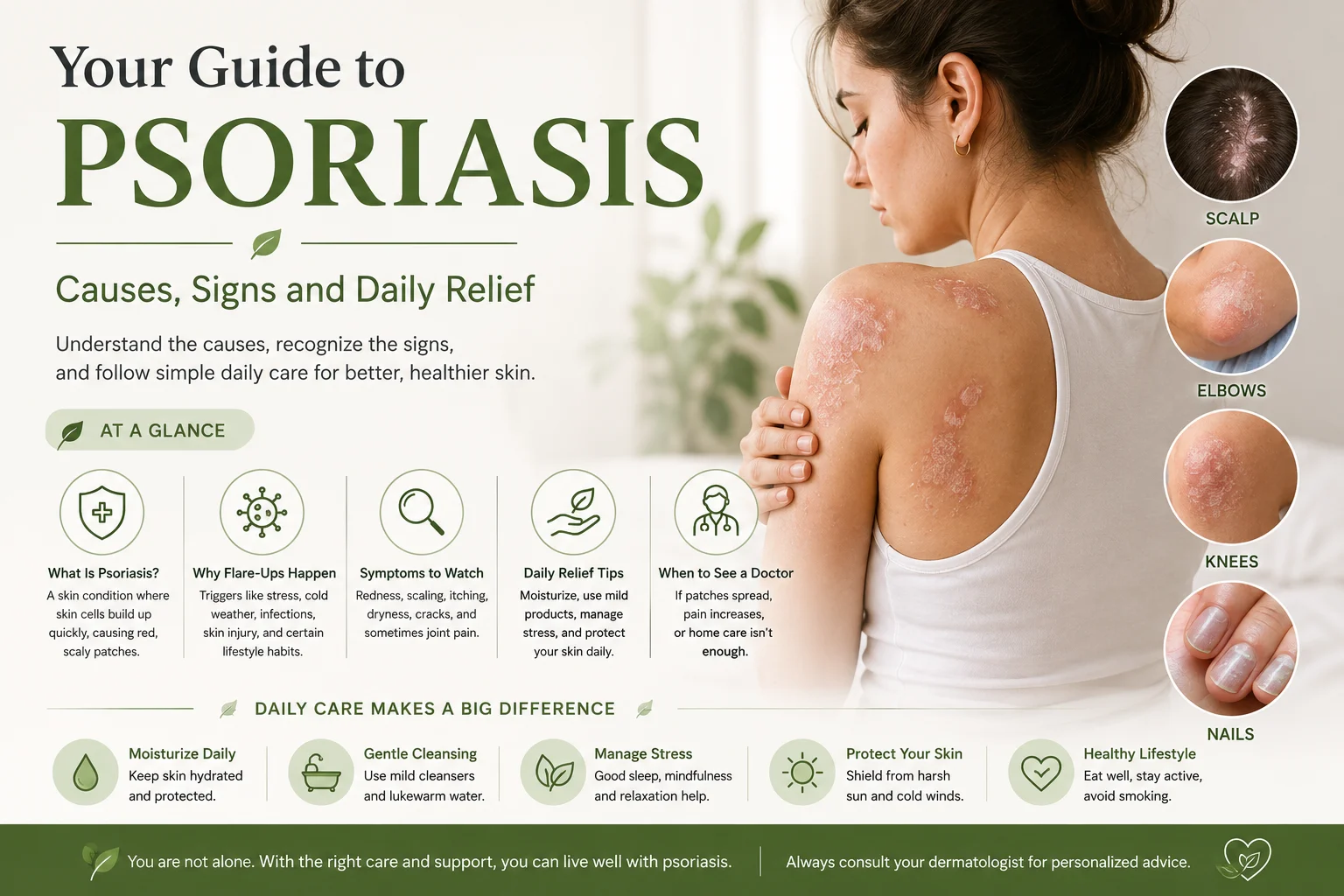
Your Guide to Psoriasis: Causes, Signs and Daily Relief
Introduction
Your elbow has a rough patch. It has been there for weeks. You put cream on it, and it fades a little, then comes back. This is how psoriasis usually starts.
Later it may show up on your scalp or your nails. Some weeks your skin stays calm. Other weeks it turns itchy and sore. Millions of people live with this. Most of them spend a long time blaming dandruff or dry weather.
You are not stuck with it. This guide explains:
- What psoriasis is
- Why flares happen
- Common Symptoms and Where It Appears
- How to care for your skin each day
What Is Psoriasis?
Your skin is always making new cells. A new cell takes about a month to travel up to the top. By the time it gets there, the old one has flaked away. You never notice this happening.
Psoriasis speeds it up. New cells arrive in days, not weeks. The old ones have not fallen off yet, so the new ones stack on top. That stack is the patch you can see and feel. It looks red, pink or silvery, and it feels thick and rough.
So why does it happen? Your body’s defence system gets its wires crossed. It acts as if your skin is hurt and rushes in to fix it. Nothing is actually wrong, but the repair work never stops.
This also means you cannot catch psoriasis from anyone, and you cannot pass it on. It is far more common than most people realise – you almost certainly know someone who has it.
Here are a few types of psoriasis:
- Plaque — by far the most common
- Guttate — small, drop-shaped spots
- Inverse — shows up in skin folds
- Pustular — tiny white bumps
- Nail and scalp — named for where they appear
Common Symptoms and Where It Appears
Psoriasis looks different on each person. Some signs show up again and again.
Watch for these symptoms:
- Red, scaly patches
- Dry skin that flakes off
- Itching or a mild burning feeling
- Skin that cracks, and sometimes bleeds
- Sore or stiff joints, in some cases
Most of these settle with gentle daily care and a skin psoriasis cream, though the joint pain needs a doctor’s eye.
It can show up almost anywhere:
- Scalp, elbows and knees, the most common spots
- Lower back, hands and feet
- Nails, which may pit, thicken or lift
- Joints
Scalp psoriasis is easy to mistake for dandruff because both cause flakes. Dandruff flakes are white and slightly oily. Psoriasis flakes are thicker and silvery. The skin under them looks red and raised. Once you know the real cause, a scalp psoriasis cream is what your skin actually needs.
What Triggers Flare-Ups
Psoriasis often stays quiet for weeks. Then something sets it off. This is called a flare-up. Triggers differ from person to person. These are the common ones:
- Stress. Worry and poor sleep trigger flares.
- Cold, dry air. Winter pulls moisture from skin.
- Harsh products like strong soaps, shampoos.
- Skin injury. Cuts or sunburn start new patches.
- Illness. Infections like a sore throat wake up symptoms.
- Smoking and alcohol. Both mean more frequent flares.
- Some medicines. Ask your doctor before changing any.
Keep a short note on your phone. Write what you used, ate or felt before a flare. Over a few months your own pattern will show.
Everyday Tips: Gentle Care and a Soothing Skin Psoriasis Cream
Small, steady habits are what keep the skin calm.
- Moisturise daily. Thick creams work best on damp skin after a bath.
- Keep baths short and warm. Pat dry, don’t rub.
- Pick mild products. Fragrance and alcohol sting.
- Cover up in winter. Cold air and indoor heating both dry the skin out.
- Be kind to your scalp. Let a scalp psoriasis cream sit a few minutes before rinsing.
- Never pick the flakes. Picking slows healing and can start a fresh patch.
- Manage stress. A short walk, slow breathing or steady sleep helps.
A plain moisturiser is enough on quiet days. When a patch turns thick, itchy or stubborn, a skin psoriasis cream may suit it better – these are made to soften scale and ease the itch, which a body lotion is not built for. Use it on the patch and keep your usual moisturiser everywhere else.
When to See a Doctor
Home care helps a lot, but it does have limits. See a skin doctor if:
- Patches are large, painful or spreading fast
- The skin cracks, bleeds or looks infected – go sooner in this case
- Joints ache or feel stiff
- Even regular care brings no change
Psoriasis has no permanent cure, but most people manage it well with the right plan and a little patience.
Conclusion
Living with psoriasis can be a challenge. It flares up, itches, and requires your attention, but now you are not without options. You understand its nature, the common places it shows up, and the things that trigger your skin.
Take things one step at a time. Make moisturising a daily habit. Replace strong soaps with milder alternatives and prioritise your rest. To find some extra relief, using a soothing, dermatologist-tested skin psoriasis cream can help calm those rough, sore spots.
Frequently Asked Questions
Can psoriasis be cured?
Although there is no permanent cure yet, you can manage the symptoms very well. Many people experience long periods with calm, clear skin.
Is it contagious?
No, you cannot pass it on or catch it from someone else. It begins deep inside the body rather than on the surface of the skin.
Does diet affect psoriasis?
Food isn’t the primary cause, but things like alcohol or very oily meals can trigger flares for some people. Enough sleep and a balanced diet will help support your skin.
How many times a day should I moisturise?
Try to moisturise at least once a day, or twice when the weather gets cold. Applying it a few minutes after a bath gives the best results.

